
Restorative Dentistry
Root Canals
Treatment that clears infection inside a tooth so it can be saved instead of removed.
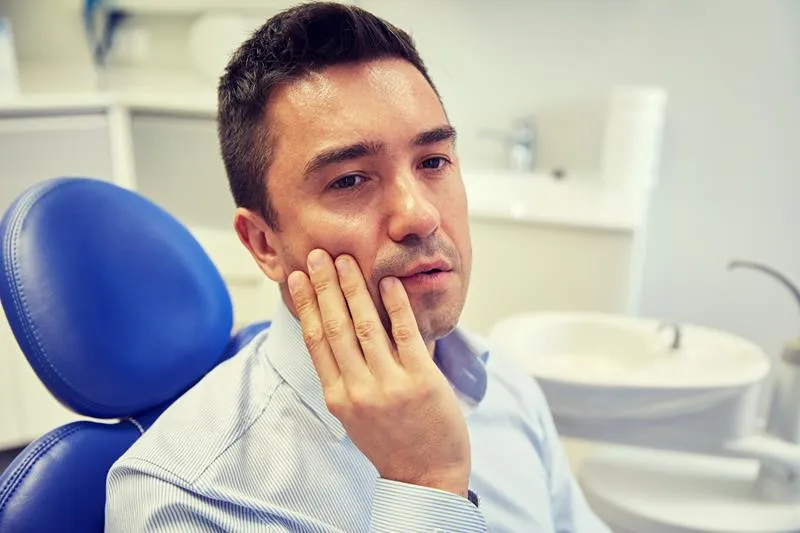
Inside every tooth is soft tissue called the pulp, which holds the nerve and blood supply. When deep decay, a crack, or an injury lets bacteria reach it, the pulp can become inflamed or infected. A root canal removes that tissue, cleans the inside of the tooth, and seals it, so the tooth can stay in your mouth.
Why we try to save the tooth
Pulling the tooth is the other option. It’s faster and cheaper on day one. But it leaves a gap that usually needs a bridge, implant, or partial later, and the bone in that spot starts to shrink. A treated tooth keeps your own root in place, and with a crown on top it can last for many years.
Say a back molar has been throbbing for a week and now aches with hot coffee long after the sip. An X-ray shows decay that has reached the nerve. A root canal stops the infection, and most patients notice the pain they walked in with fades within a few days.
The visit, step by step
We numb the tooth first, and for most people it feels a lot like getting a filling. A small rubber sheet keeps the area dry. We make an opening in the top of the tooth, remove the pulp, then clean and shape each canal. They’re filled with a rubber-like material and sealed.
The tooth can be tender for a few days. Back teeth in particular get brittle after treatment, so we usually recommend a crown to protect them from cracking.
Lingering pain, swelling, or sensitivity that doesn’t go away are worth getting checked. An exam and X-ray tell us whether you need one.
Frequently asked questions
- Is a root canal painful?
- With modern anesthetic, a root canal typically feels much like getting a filling. Most patients find it relieves the pain they came in with rather than causing it.
- Why not just pull the tooth?
- Keeping your natural tooth usually preserves your bite and jawbone better than removing it. A root canal lets us treat the infection while saving the tooth, which is why we favor it when it's a realistic option.
- What happens after a root canal?
- The tooth may feel tender for a few days as it settles, which usually eases on its own. Because a treated tooth can become brittle, we often recommend a crown afterward to protect it.
- How do I know if I need one?
- Lingering pain, sensitivity to hot or cold, or swelling near a tooth can be signs the inner pulp is affected. An exam and X-ray let us tell you honestly whether a root canal is needed.