
Restorative Dentistry
Dental Implants
Replacements for missing teeth that stand on their own without altering neighboring teeth.
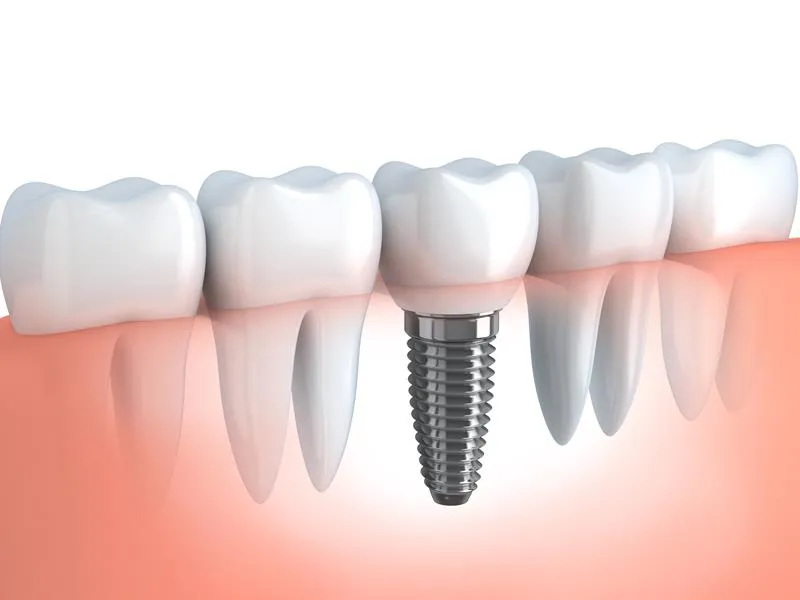
An implant is a small post, usually titanium, set into the jawbone where a tooth root used to be. After it heals, a crown is attached on top. The result is a single tooth that stands on its own.
Why the teeth next door stay untouched
This is the main reason we bring up implants. A bridge needs the teeth on either side of a gap to be shaped for crowns. An implant doesn’t lean on them at all. If those neighbors are healthy, keeping them that way matters to us.
There’s also the bone. When a tooth is lost, the jawbone in that spot slowly shrinks because nothing is using it. An implant acts like a root and helps keep that bone in place.
Picture someone in their 40s who loses a front tooth to an old injury, with healthy teeth on both sides. Cutting those down for a bridge would feel like a big cost. An implant lets them replace the one tooth and leave the rest alone.
A timeline measured in months
Implants are not quick. After the post is placed, the bone needs a few months to fuse with it before the final crown goes on. Some people need a bone graft first, which adds time. We’ll coordinate each step and tell you what’s next at every stage.
Not everyone is a good candidate. Gum disease, low bone volume, smoking, and some health conditions can all change the picture, and we can only judge that with an exam and imaging. If an implant isn’t the right fit, we’ll say so and go over a bridge or partial instead.
Frequently asked questions
- Are dental implants painful?
- The placement is done with local anesthetic, and most patients are comfortable during the procedure. Any soreness afterward is usually mild and manageable with typical over-the-counter pain relief.
- How long does the implant process take?
- Because the implant needs time to fuse with the bone, treatment often spans several months from placement to the final crown. We'll give you a clear timeline based on your specific situation.
- Am I a candidate for an implant?
- Good candidates generally have enough healthy bone and stable gums, but the only way to know is an exam and imaging. We'll tell you honestly whether an implant, a bridge, or another option makes the most sense.
- How do I care for a dental implant?
- Implants are cared for much like natural teeth, with daily brushing, flossing, and regular checkups. They can't get cavities, but the surrounding gum and bone still need attention to stay healthy.