
Restorative Dentistry
Bridges
A fixed way to replace one or more missing teeth by anchoring to the teeth beside the gap.
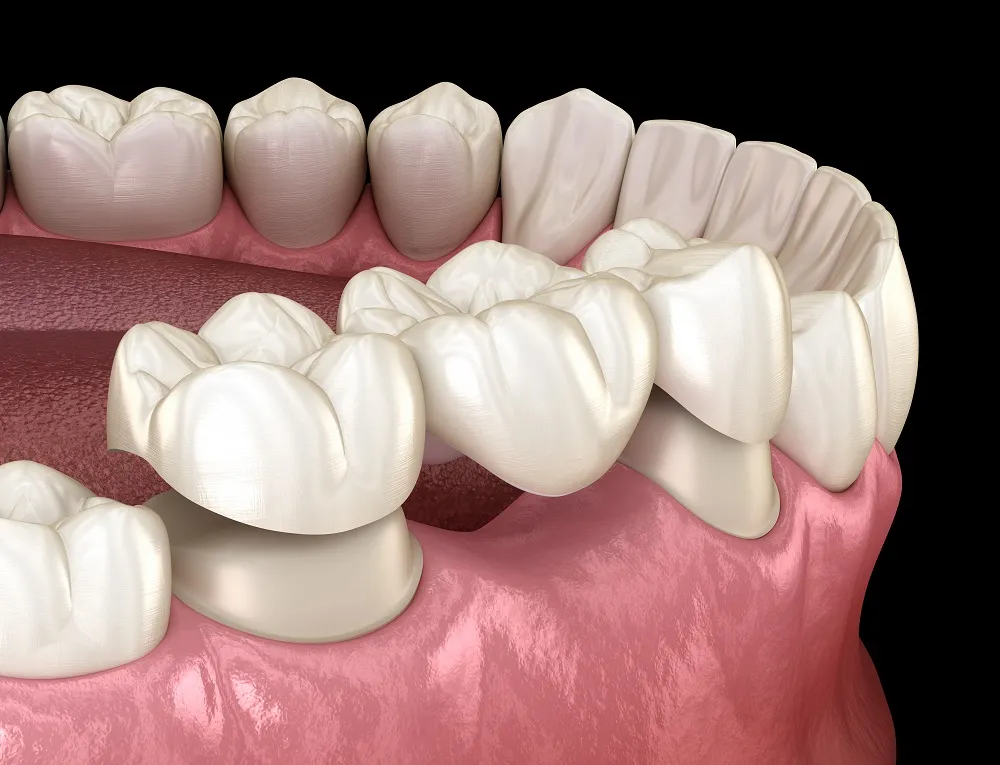
A bridge fills the space left by a missing tooth. We put crowns on the teeth on each side of the gap, and a replacement tooth is joined between them, so the whole piece is cemented in and stays put. You don’t take it out at night.
The tradeoff with neighboring teeth
Here’s the part we want you to know up front. To hold a bridge, the two teeth beside the gap have to be shaped down for crowns. If those teeth already have large fillings or old crowns, that’s a fair trade, since they may need the coverage anyway. If they’re healthy and untouched, we’ll talk seriously about an implant first, because it fills the gap without changing them.
For example, picture a patient who lost a lower molar years ago and the teeth on both sides already carry big, aging fillings. A bridge there does two jobs at once. It covers those worn teeth and closes the space before the teeth around it start to tip in.
Leaving a gap open isn’t always harmless. Over time the tooth above can drift down and the ones beside it can lean, which changes how you bite.
Two visits and a new cleaning habit
Most bridges take two appointments. First we numb the area, shape the supporting teeth, take an impression, and send you home with a temporary. A dental lab makes the final bridge. At the second visit we check the fit and your bite, then cement it.
After that, you’ll need to clean under it. A floss threader or a small brush does the job. We’ll show you how, and it gets easy after a week or so.
Frequently asked questions
- How long does a dental bridge last?
- With good brushing, flossing, and regular checkups, many bridges last a decade or more. We'll show you how to clean beneath the bridge so the supporting teeth stay healthy.
- Is a bridge better than an implant?
- Neither is automatically better; it depends on your teeth, bone, and health. We'll walk you through both honestly and recommend the option that preserves the most healthy tooth structure for your situation.
- Does getting a bridge hurt?
- The tooth preparation is done with local anesthetic, so you shouldn't feel pain during the visit. Mild soreness afterward is normal and usually settles within a few days.
- How do I clean under a bridge?
- A bridge is cleaned with a floss threader or small interdental brush to reach beneath the replacement tooth. We'll demonstrate a routine that fits easily into your day.